POS business in Nigeria 2026: startup costs, daily profit and whether it’s still worth it
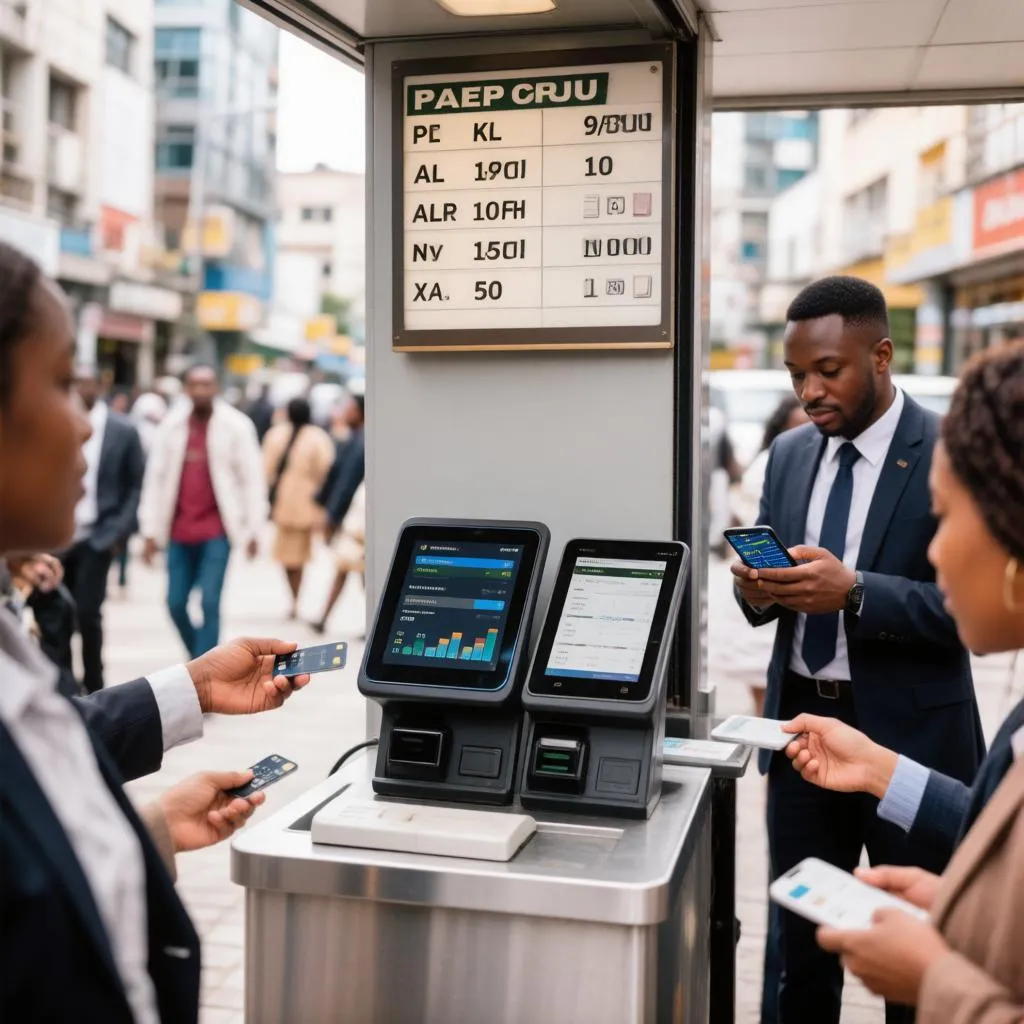
Stand on any busy Nigerian street for ten minutes and count the kiosks with card machines. They are everywhere — outside markets, at estate gates, beside motor parks — and each one carries the same whispered promise: small capital, daily cash, no boss. POS agency banking has become Nigeria’s most contagious business idea, and also its most misunderstood. Scattered across the country, more than 1.8 million registered agents now serve customers the banks never reached, processing hundreds of billions of naira every year — yet the same saturation that made the business famous has quietly squeezed the margins of the people standing behind the machines.
So the honest question for 2026 is not “is POS profitable?” It is “who can still make it profitable, at what cost, and under rules that changed more in the last twelve months than in the previous five?” The answers are concrete, and they matter before any money leaves your account.
What the business actually is
A POS agent is essentially a mini-bank branch. You hold a terminal from a licensed provider, keep cash on hand (the “float”), and serve customers who want to withdraw, deposit, transfer, buy airtime or pay bills. Your income is the difference between what customers pay you in charges and what your provider deducts per transaction. It is a cash-handling business with thin margins per transaction, high daily volume and a reconciliation habit that separates the survivors from the casualties.
The economics look deceptively simple. Charge ₦200 for a withdrawal, pay your provider ₦100 for the service, and you keep ₦100. Multiply by dozens of transactions a day and the arithmetic seems to guarantee a living. In practice, network failures, cash scarcity, fraud losses, rent and data costs eat into that margin daily — which is why two agents on the same street with the same provider can earn numbers ten times apart.
The rules changed, and many agents have not noticed
Three regulatory shifts define the 2026 landscape, and each one reshapes the business model directly. Since October 2025, the CBN’s agent banking guidelines cap cash-out at ₦100,000 per customer per day and ₦500,000 per customer per week, with a cumulative ₦1.2 million daily ceiling per agent terminal. From 1 April 2026, every agent must operate exclusively with a single financial principal — one bank, mobile money operator or licensed super-agent — ending the old practice of running Moniepoint, OPay and PalmPay terminals side by side to chase the best rates. And since 1 August 2026, terminals are geo-fenced: a machine must stay within 70 metres of its registered address, enforced through automatic monitoring.
None of these rules kills the business. But together they end two of its most popular tricks — multi-platform arbitrage and the roving terminal that follows the crowd — and they reward exactly the thing that always mattered most: a fixed location with genuinely steady foot traffic.
What it costs to start
The terminal is the cheapest item on the list. The float is the real capital, and underfunding it is the most common rookie mistake in the entire industry. A realistic budget for one location breaks down as follows:
| Item | Typical cost (₦) | Notes |
|---|---|---|
| POS terminal | 15,000 – 60,000 | Moniepoint around ₦21,500 as caution plus logistics; PalmPay ₦20,000–₦30,000 caution or ₦40,000–₦60,000 outright |
| Float (working cash) | 50,000 – 300,000+ | The actual constraint; more float means more transactions served |
| Kiosk or shop space | 5,000 – 25,000 per month | Market kiosks beat expensive shops on net profit |
| CAC registration | 25,000 – 35,000 | Required for formal agency banking |
| Attendant wages | 30,000 – 60,000 per month | Only if you will not stand there yourself |
| Data, power, slips, misc. | 5,000 – 15,000 per month | Cloud terminals are data-hungry |
| Security and repairs | 10,000 – 20,000 | Guard allowance or camera maintenance |
Add those up and one location realistically demands between ₦150,000 and ₦500,000, depending on how grand the shop is and how much float you carry. The spread is wide because the float is a choice: a ₦300,000 float lets you serve the afternoon rush without turning customers away, while a ₦50,000 float earns you a reputation for running out of cash by 10 a.m. — and customers do not come back.
How the money actually arrives
Income depends on four variables: transaction count, charge levels, provider fees and operating costs. Provider deductions are largely standardised — Moniepoint charges 0.5% on withdrawals up to ₦20,000 and a flat ₦100 above it, with ₦20 on transfers; PalmPay applies 0.5% across withdrawals with a remarkably low ₦10 transfer fee; industry associations publish recommended charge tiers for what agents may collect from customers. The gap between what you collect and what you remit is your gross profit, and everything else — rent, data, wages, losses — comes out of it.
The earning scenarios below show how sharply the outcome swings on one factor alone. Before comparing them, it is worth fixing one habit: judge the business by net profit after costs, never by the pile of charges collected at the counter.
| Setup level | Location type | Daily transactions | Daily net (₦) | Monthly net (₦) |
|---|---|---|---|---|
| Umbrella stand, small float | Residential street, small market | 20–40 | 3,000 – 7,000 | 90,000 – 210,000 |
| Kiosk, moderate float | Busy market, school area, estate gate | 50–100 | 7,000 – 15,000 | 210,000 – 450,000 |
| Kiosk or shop, large float | Major market, bus stop, hospital area | 100–200 | 15,000 – 25,000 | 450,000 – 750,000 |
| Multi-service hub | High-density commercial area | 200+ plus bills and airtime | 25,000 – 50,000+ | 750,000 – 1,500,000+ |
The bottom rows look glamorous, but they are earned, not promised. An agent processing 70 daily transactions at ₦200 average charge clears roughly ₦14,000 a day before costs; the same charges at 15 transactions produce ₦3,000. Location is the entire business, and it is the one variable no advert, course or YouTube video can supply for you.
The costs that quietly eat the profit
Monthly expenses are where optimistic projections fall apart, because they arrive in small, frequent instalments that never feel fatal individually:
- Mobile data can consume up to ₦30,000 monthly for agents on cloud-based terminals.
- Transporting cash from the bank to top up the float can cost ₦25,000 a month in a city with heavy traffic.
- Rent divides into everything from ₦5,000 market kiosks to ₦300,000-a-year shops, and a ₦5,000 kiosk with identical daily income is structurally more profitable.
- Fraud and failed-transaction losses hit directly: reversed transfers, fake alerts and stolen float are part of the risk landscape.
- Network downtime is unpaid time — when the terminal refuses transactions for an hour at peak, that revenue never returns.
An agent earning ₦100,000 gross in a month can easily spend ₦23,000–₦40,000 on these items, which is why the realistic net for a committed beginner often lands between ₦77,000 and ₦150,000 in the first months — with the upper tiers reserved for locations the agent has verified by standing there and counting people for a week before signing anything.
Is it still worth it?
The saturation argument has real substance. One point eight million agents is an enormous network, and in dense urban districts customers can walk ten metres between competing kiosks, which drags the charges they tolerate downward. Cash scarcity episodes, when they occur, create queues and hunger for the service — but they also strain the float and expose small operators to robbery risk while carrying cash. The business that rewarded everyone in 2021 now rewards only the prepared.
Whether it still makes sense in 2026 splits along clear lines:
- Worth starting if you have a genuinely high-traffic location — near a market entrance, motor park, hospital gate or estate junction — that you can occupy before someone else does.
- Worth starting if you will commit to daily presence or fund a trustworthy attendant, because the terminal is not a passive investment.
- Worth starting if you can float ₦200,000 or more, since undercapitalised terminals churn customers faster than they attract them.
- Doubtful if your only location is a quiet residential street already served by two established agents.
- Doubtful if you planned to run several platforms side by side — the exclusivity rule has closed that door permanently.
- Not worth it if you cannot verify the daily transaction count yourself; counting footfall for a week is worth more than any business plan.
Seen this way, the POS business of 2026 is no longer a lottery ticket. It is a location business with a machine attached.
Starting properly, step by step
The successful agents in any neighbourhood followed roughly the same sequence, and skipping steps is what produces the abandoned terminals gathering dust in storage rooms. The path looks like this:
- Choose and verify the location — count potential customers on foot for several days at different hours before committing to rent.
- Pick one provider under the exclusivity rule and compare terms honestly: Moniepoint for reliability and support, PalmPay for low fees and fast approval, OPay for wide coverage.
- Register formally with CAC if required and complete the provider’s agent onboarding, including the caution deposit or terminal fee.
- Fund a float sized to your expected daily volume, and keep business money strictly separate from personal money from day one.
- Reconcile every evening against the provider’s dashboard, and reconcile the provider’s fees against your own records monthly to catch deductions, errors and fraud early.
The fifth step is the one nobody skips twice. Reconciliation errors, unexplained deductions and phantom charges are survivable only when caught close to the transaction, and the agent who reviews the dashboard nightly rarely ends a month wondering where the money went.
The verdict for 2026
A POS business in Nigeria is still one of the most accessible daily-income ventures in the country, and in the right location it can comfortably outpay most salaried jobs — ₦200,000 to ₦600,000 net monthly is achievable for a well-placed, well-floated operator. But the golden era of easy money has closed: exclusivity rules, geo-fencing, withdrawal caps and a crowded field have converted it from a land grab into a genuine small business that rewards diligence, float discipline and, above all, location.
If you have the site, the capital and the patience to count transactions before you count profits, it remains worth doing. If you were hoping to buy a terminal, drop it in front of your house and wait for customers, the market has already priced in that optimism — and it is not paying for it.