Why Oil And Gas Are Attracting Investors Again In Canada
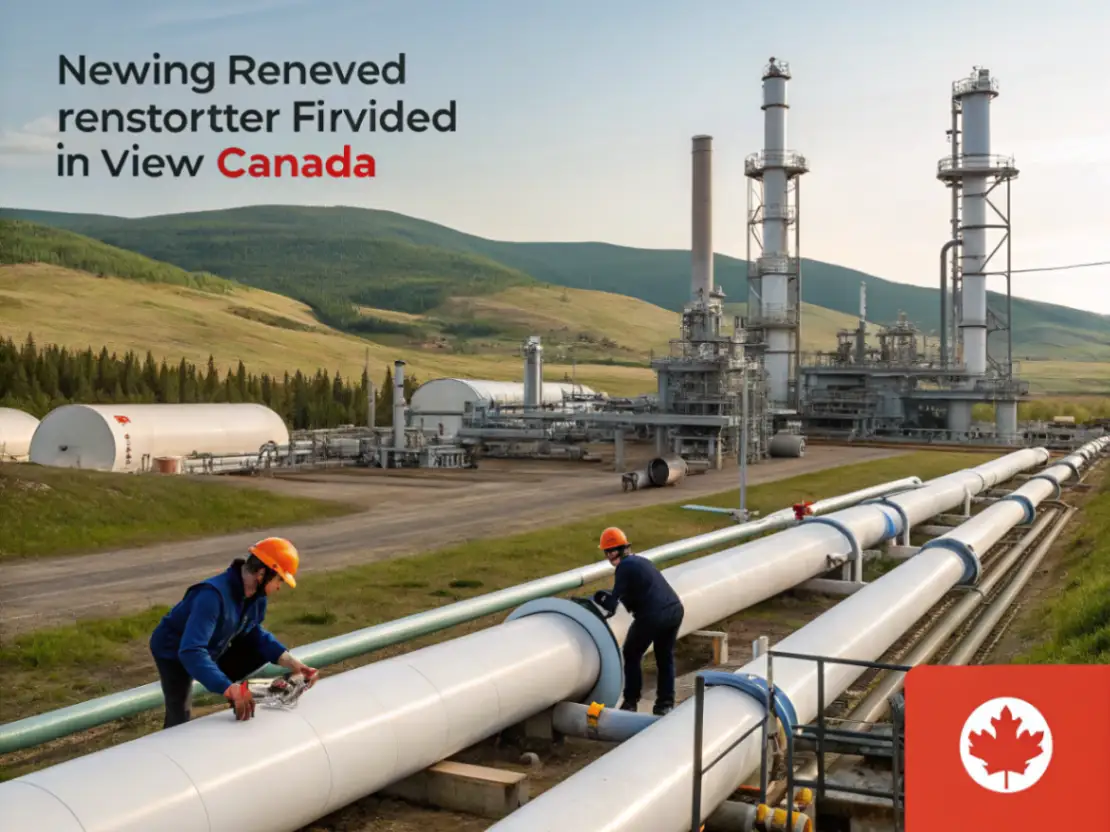
The Canadian oil and gas sector has always been cyclical, moving through phases of optimism and skepticism depending on global prices, political pressure, and technological change. For a while, it seemed that the industry had lost its appeal to investors, especially as environmental concerns intensified and capital shifted toward renewable energy. Yet the narrative has shifted again. Capital is quietly flowing back into Canadian energy, and the reasons behind this renewed interest are more complex than a simple rebound in oil prices.
Investors are not returning out of nostalgia or speculation alone. They are responding to a combination of structural changes, disciplined corporate behavior, geopolitical shifts, and a more balanced view of energy transition realities. Canada, with its vast reserves and relatively stable regulatory environment, is once again being reassessed as a long-term opportunity rather than a fading legacy sector.
Global energy realities are reshaping investment logic
The past few years have forced investors to rethink assumptions about how quickly the world can move away from fossil fuels. While renewable energy continues to expand, it has not yet reached a scale capable of fully replacing hydrocarbons, especially in heavy industry, transportation, and emerging economies. Energy demand remains strong, and supply constraints have become more visible.
Canada benefits from this shift because it is perceived as a reliable producer in a world where energy security has become a strategic priority. Disruptions in global supply chains, geopolitical tensions, and underinvestment in traditional energy sources have created tighter markets. This environment favors producers who can deliver consistent output over long periods.
Oil sands, once criticized for their cost structure, are now viewed differently. Advances in extraction technology and improved operational efficiency have lowered break-even prices, making Canadian projects more competitive than before. Investors who once avoided the sector due to volatility are now reassessing it as a stable cash-generating industry.
At the same time, natural gas has gained importance as a transitional fuel. Canada’s vast reserves position it well to meet global demand, particularly as countries look for cleaner alternatives to coal. Liquefied natural gas infrastructure projects are reinforcing this trend, opening new export opportunities and strengthening the long-term outlook.
Discipline and shareholder returns are changing perceptions
One of the most important shifts within the Canadian oil and gas sector has been the move toward financial discipline. In the past, companies often prioritized production growth over profitability, reinvesting aggressively even during periods of low prices. This approach led to weak returns and eroded investor confidence.
Today, the focus has changed. Companies are emphasizing free cash flow, reducing debt, and returning capital to shareholders through dividends and share buybacks. This transformation has not gone unnoticed by institutional investors, who are increasingly drawn to predictable income streams and lower risk profiles.
Several factors have contributed to this change in behavior:
• Stronger corporate governance and pressure from shareholders demanding better capital allocation.
• Lessons learned from previous downturns, which exposed the risks of excessive leverage.
• A more cautious approach to expansion, prioritizing efficiency over scale.
• Increased transparency in reporting and long-term planning.
This disciplined approach has made the sector more attractive, particularly for income-focused investors who value stability over aggressive growth. The shift also aligns better with broader market trends, where capital efficiency and returns are becoming more important than sheer output.
Environmental strategies are evolving rather than disappearing
Environmental concerns remain a central issue for the oil and gas industry, especially in Canada, where regulatory scrutiny is high. However, the narrative is evolving. Instead of being seen as a barrier to investment, environmental strategy is becoming part of the investment case.
Canadian producers are investing heavily in emissions reduction technologies, carbon capture, and more efficient extraction methods. These initiatives are not only aimed at compliance but also at improving long-term competitiveness. Companies that can demonstrate progress in reducing their environmental footprint are gaining an advantage in attracting capital.
There is also a growing recognition that the energy transition will take time. Investors are beginning to differentiate between companies that are adapting to this transition and those that are not. In Canada, many firms are positioning themselves as part of the solution rather than the problem, integrating sustainability into their business models.
This shift is supported by government policies that encourage innovation while maintaining production capacity. The balance is not perfect, and debates continue, but the overall direction is clearer than it was a few years ago. For investors, this clarity reduces uncertainty and supports long-term decision-making.
Infrastructure and export capacity are improving
One of the longstanding challenges for Canadian oil and gas has been limited access to global markets. Pipeline constraints and logistical bottlenecks have historically forced producers to sell at a discount compared to international benchmarks. This issue has weighed heavily on investor sentiment.
Recent developments are beginning to change this picture. New and expanded infrastructure projects are improving connectivity, allowing Canadian energy to reach a broader range of buyers. This not only increases revenue potential but also reduces dependence on a single market.
Before looking at how these improvements translate into investment appeal, it helps to examine the key factors that influence the sector’s attractiveness.
| Factor | Impact on investment appeal | Current trend |
|---|---|---|
| Oil price stability | Higher predictability of returns | Moderately stable |
| Infrastructure capacity | Better market access and pricing | Improving |
| Corporate discipline | Stronger cash flow and dividends | Strengthening |
| Environmental performance | Reduced regulatory risk | Gradually improving |
| Global demand | Sustained need for hydrocarbons | Increasing |
These elements together create a more favorable environment for investors. Infrastructure improvements, in particular, have a multiplier effect, enhancing the benefits of other positive trends. As transportation becomes more efficient, companies can capture higher margins, making the entire sector more competitive.
The expansion of export routes also aligns with global demand patterns. Asian markets, in particular, represent significant growth opportunities, and improved logistics make it easier for Canadian producers to participate in these markets.
Geopolitics and energy security are driving capital flows
The global energy landscape has been reshaped by geopolitical developments, leading to a renewed focus on energy security. Countries are increasingly looking for stable, politically reliable sources of oil and gas, and Canada fits this profile well.
Unlike some major producing regions, Canada offers a relatively predictable legal and regulatory framework. While there are challenges, including environmental regulations and approval processes, the overall system is transparent and stable. This stability is highly valued by investors, especially in uncertain times.
Geopolitical tensions have also highlighted the risks of relying on a narrow set of suppliers. Diversification has become a strategic priority, and Canadian energy is benefiting from this shift. Long-term contracts, particularly in natural gas, are becoming more common, providing additional revenue visibility.
The role of North America as an integrated energy market further strengthens Canada’s position. Cross-border infrastructure and trade agreements create a robust system that supports both production and distribution. For investors, this integration reduces risk and enhances resilience.
Valuation and opportunity are attracting new attention
Despite the improvements in fundamentals, many Canadian oil and gas companies still trade at relatively low valuations compared to their global peers. This discrepancy is attracting value-oriented investors who see an opportunity for re-rating as market perceptions change.
Several factors contribute to this valuation gap, including historical skepticism, environmental concerns, and currency fluctuations. However, as the sector demonstrates consistent performance, these concerns are gradually being reassessed.
The combination of strong cash flow, disciplined management, and improving market access creates a compelling investment case. Investors who focus on fundamentals rather than sentiment are increasingly recognizing this.
There is also a growing interest from international investors who had previously overlooked the Canadian market. As global energy dynamics evolve, diversification becomes more important, and Canada offers a unique mix of stability, scale, and growth potential.
Conclusion
The renewed interest in Canada’s oil and gas sector is not driven by a single factor but by a convergence of trends that have reshaped the investment landscape. Global energy realities, improved corporate discipline, evolving environmental strategies, better infrastructure, and geopolitical shifts all play a role.
What stands out is the change in perception. The sector is no longer viewed solely through the lens of volatility and environmental risk. Instead, it is being recognized as a stable, cash-generating industry that can coexist with the broader energy transition.
For investors, this creates a more nuanced opportunity. The focus is not on rapid growth but on consistent returns, long-term resilience, and strategic positioning within a changing energy system. Canada, with its resources and evolving industry practices, is well placed to benefit from this shift.